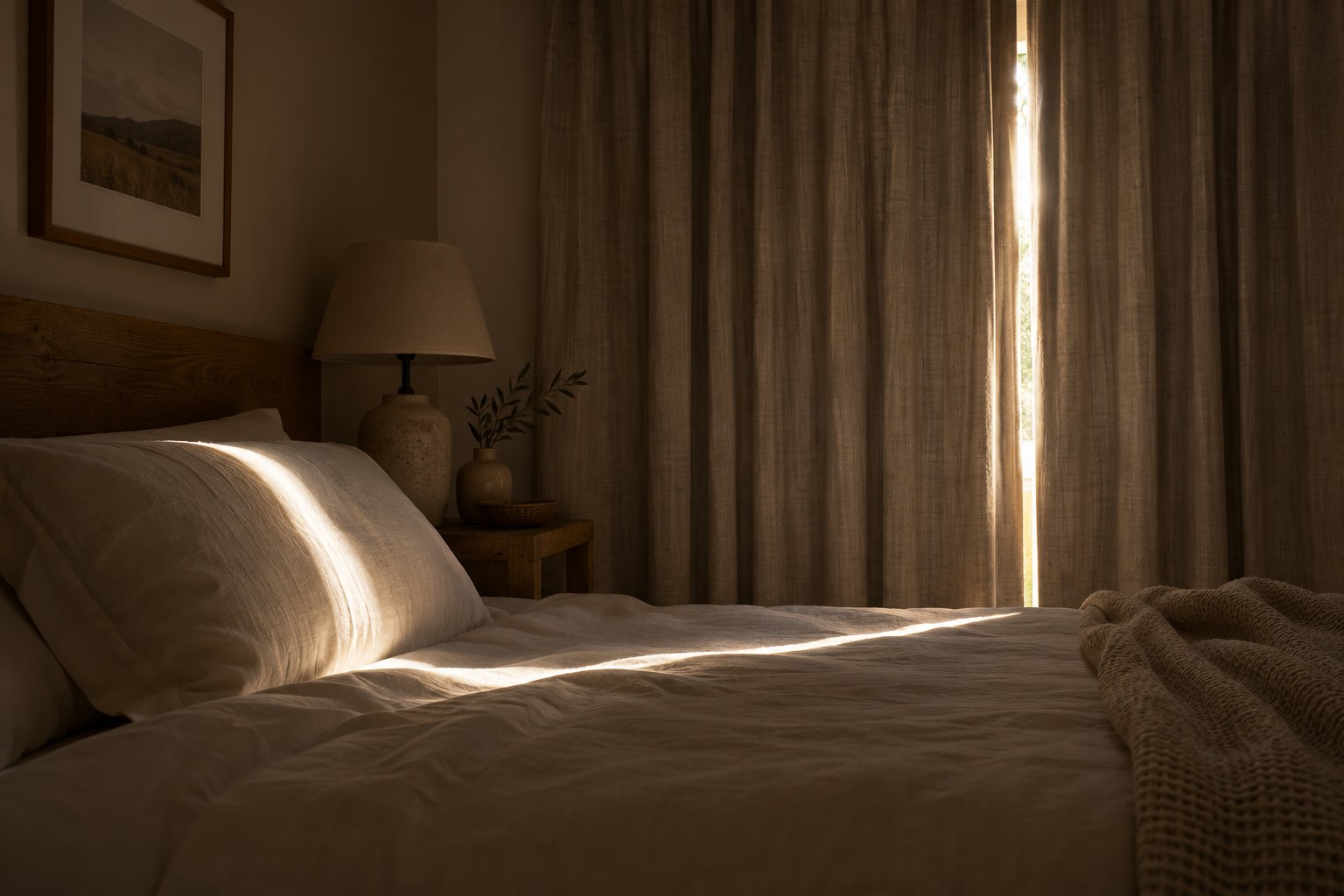
Tonight, enter one of your rooms when your guest is about to go to bed. Not to check the presentation of the tray. To lie down. From the pillow, a strip of light appears behind the curtain. Standing near the door, you might not have noticed it.
Someone on your team may have known about that fault for weeks. The person preparing the room sees it every morning. They reported it, then continued working. Reception received a similar comment. When the time comes to request a quote, management rediscovers the issue.
Now imagine the guest. Tomorrow may be their first morning in a long time without an alarm. They chose your hotel for that, even if they did not put it into words. A stay can restore their rest. But the room needs to let them sleep, not merely let them notice how beautiful it is.
What should you check in a room before signing a quote?
Begin by testing the use that motivates the expense: in this case, sleep. Close the curtains, turn off the lights and observe the room from the bed with the person who prepares it.
A clean room and a ready room do not quite answer the same question. The first asks whether the work has been done properly. The second asks what the arriving guest will actually be able to experience. Both are essential. No atmospheric photograph can replace that shift to the pillow’s perspective.
Stay with one specific fault. Does the curtain close poorly? Does an indicator light shine towards the face? Does a piece of equipment make an avoidable noise? You are not conducting a complete technical assessment. You are looking for a discomfort the team can demonstrate, then a check someone can repeat.
How can you avoid reporting the same fault three times?
Use the existing maintenance record to note the fault once, the room concerned and the person who will check the correction from the bed.
Reception and housekeeping need to find that record, not each maintain a competing inventory. Agree where to look before creating another note. The person checking can then say whether the problem has been resolved, rather than merely noting that work took place.
Time saved on administration can return to preparing the arrival: observing, adjusting and explaining something useful to the guest. People remain the hotel’s first strength when their attention is not lost in repeated copying.
What could you test before the next arrival?
Lie down for two minutes with the team’s agreement and participation. Choose a detail, correct it if that falls within your competence, then repeat the test. Specialist intervention remains necessary where the fault requires it.
If adjusting the curtain rail is enough, you have information to guide the next expense. If nothing changes, you have described the problem more clearly for the professional. The action does not replace a renovation project: it helps you ask a better question before financing it.
Which indicator should you keep?
Compare reports relating to the chosen fault over a comparable number of occupied room nights, before and after correction. No complaints is not perfect proof of restored sleep. Compare it with your test and the team’s observations. A small preparation ritual can emerge and become a discreet signature of your hotel.
Bruno Valery · U30KEYS
P.S. Come with a photo and a quote you are unsure about. During our conversation, let’s choose what you can check with your team before signing. I like an investment decision to begin with a question about how something will be used.